


Scaling a city-wide public locker network
Backend and frontend development, Mobile app development
Logistics, Supply Chain
Go, React.js, React Native
2014
USA
July 2023 – Present
5 full-time
Executive Outcome
GoLocker is building the first brand-agnostic public package locker network in New York City providing both first-mile and last-mile logistics. When Impressit came on board in July 2023, GoLocker had around 10 active locker locations. And that number has grown to 100!
Over the same period, our team migrated the client's legacy system (originally built as a proof-of-concept) to a scalable architecture, supported launching pilot program in partnership with the NYC Department of Transportation, and building proactive monitoring applications to reduce customer support research time by 40%. Meanwhile, our DevOps specialist identified and eliminated the system's vulnerabilities, ensuring it's safe to use.
GoLocker's user registrations grew by 60% year over year, and the platform now handles B2C customers, warehouse operations, consolidation services, and carrier communications — all from a single unified system.
"The relationship with Impressit is a benchmark of what we're trying to achieve with our clients in terms of the cohesiveness and the efficiency of our work."
Client Context
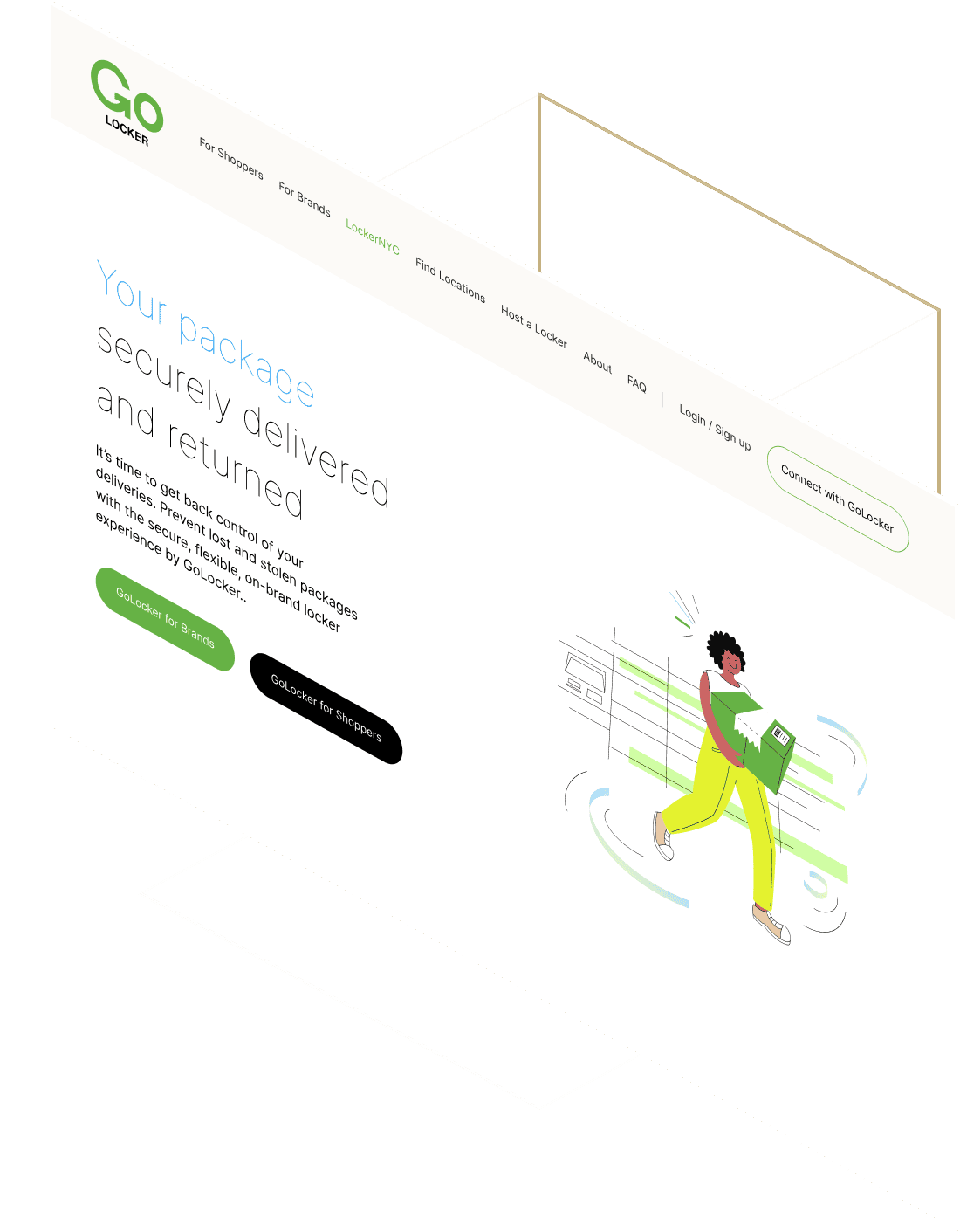
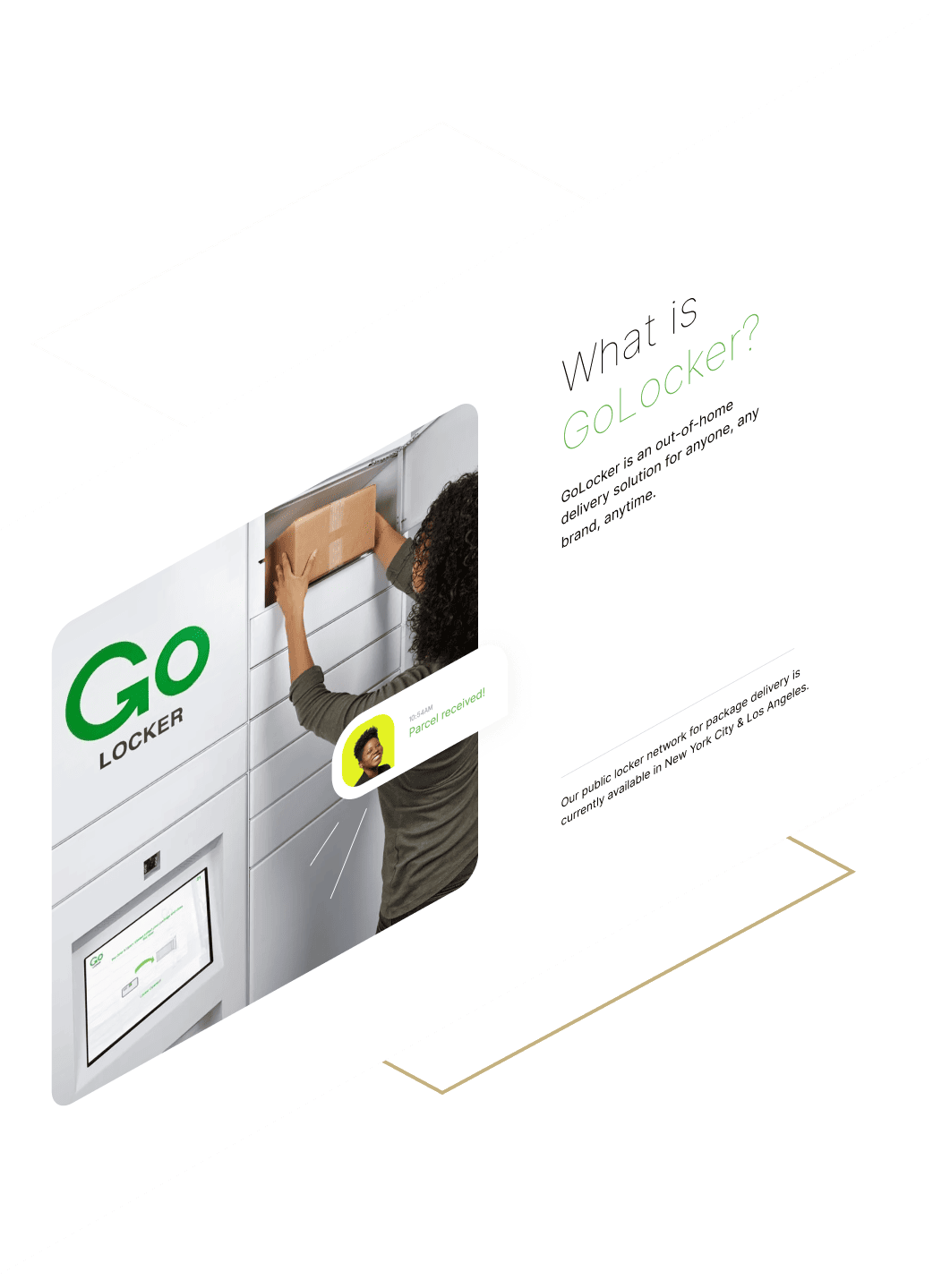
GoLocker is a New York City-based logistics tech company operating a network of brand-agnostic package lockers. These lockers let consumers and retailers route deliveries to the nearest pickup or dropoff return locations.
The company also provides consolidation services, and distribution. This makes the platform's underlying technology significantly more complex than a standard consumer app.
GoLocker is among the first companies in New York City to offer this type of last-mile locker solution. The opportunity market is enormous: to serve NYC's 8 million residents at scale. GoLocker is in active growth mode, with major retailers already expressing interest in their network.
Client’s Challenges
GoLocker had the right product idea and perfect timing, but the technology was holding them back. The system had been built quickly to validate the concept. It worked, but it couldn't scale.
Several critical challenges were standing in the way of the company's growth:
- The original system could not scale with operations. All core systems were built for a proof-of-concept. As the network of lockers expanded, the architecture created friction across all teams.
- Visibility across operations was fragmented and largely manual. There was no unified dashboard. Teams handled package tracking, support tickets, and carrier updates through separate tools and manual processes, which led to slow resolution times and coordination gaps.
- Customer support resolution was slow. Issues were taking hours or even days to resolve. Teams were spending excessive time researching individual cases because the data was not centralised.
- Security and compliance controls required updates. GoLocker processes customer data and requires additional security compliance infrastructure to be built into development processes to meet security compliance requirements. The LockerNYC pilot launch had a tight deadline. GoLocker's participation in the LockerNYC program — a New York City government initiative to reduce package theft and emissions — required the Freemium plan to go live by April 2024. Missing that deadline wasn't an option.
Goals & Success Criteria
Before getting started, GoLocker and Impressit took the time to align on a clear set of priorities. We decided to measure success across two key dimensions: technical and operational.
On the technical side, the goals included migrating the existing system to a new, scalable architecture and building a unified operations dashboard to replace manual workflows. Operationally, the focus was on launching the LockerNYC pilot on time and establishing DevOps and security practices that could support future B2B needs.
The most critical requirement? Nothing could break during the transition. GoLocker was live with real customers and active brand integrations. The migration had to happen without disrupting ongoing operations.
Our Approach
Impressit became a part of GoLocker's team rather than operating as a separate vendor. Our engineers attended sprint planning sessions and collaborated directly with GoLocker's product leads. This allowed us to resolve production issues within 24 hours. This responsiveness quickly became a hallmark that GoLocker's enterprise B2B clients came to rely on.
Our team of five brought full-stack expertise across Go, React.js, and React Native, along with a dedicated DevOps and SecOps capability. When GoLocker needed support with user behaviour analytics, Impressit brought in a marketing specialist to evaluate tooling options and configure reporting. This flexibility (adapting to real business needs rather than sticking rigidly to a predefined scope) is central to how we work.
We followed an Agile delivery model with regular sprint reviews and direct stakeholder engagement. As GoLocker's priorities evolved with their growth, our team adapted without losing delivery tempo.
Solution Overview
Our work focused on three key areas:
- stabilizing and migrating the existing system
- building new operational infrastructure
- launching the LockerNYC pilot
At the heart of this project was migrating GoLocker's B2C platform from its original proof-of-concept architecture to a new, modular system. This included a full rewrite of the backend in Go, a React.js web interface, and a React Native mobile application. The new architecture was designed from the start to support B2B functionality, including communication with brands
In addition to the migration, our team built a unified operations dashboard. This gave GoLocker's customer support and operations teams a single view of package status, carrier activity, and user accounts. It thus eliminated the manual, multi-tool workflow that had existed before.
In parallel, we established a robust DevOps and SecOps infrastructure, which included vulnerability assessments, security hardening, and configuration of monitoring systems. We also implemented user behaviour tracking through Mixpanel to give GoLocker's internal teams visibility into registration flows and product usage patterns.
Key Decisions & Trade-offs
Throughout this collaborative effort, several decisions had significant consequences for the project's outcome:
- Architecture rewrite over incremental patching. The existing system had structural limitations that couldn't be resolved through incremental fixes. Current architecture could not support all business use cases limiting the number of feature enhancements and business value that could be unlocked. We made the strategic choice to plan a complete rewrite with a new architecture. This required more upfront investment but was the only path to sustainable scale.
- Mixpanel over Google Analytics. After evaluating both platforms against GoLocker's specific reporting needs, Impressit recommended Mixpanel. We chose Mixpanel for its superior event-based tracking and the quality of the user behaviour reports it could deliver to the GoLocker team.
- Security investment before scale. Impressit prioritised DevOps and SecOps integration early in the engagement, before GoLocker's B2B pipeline required it. This approach proved invaluable, as the investment paid off directly in later enterprise procurement conversations.
- LockerNYC pilot as a strategic milestone. The LockerNYC launch was treated as a fixed deadline rather than a flexible goal. We structured our delivery around this milestone, which required clear scope prioritization and a commitment to shipping specific features on time, regardless of other work in progress.
Results & Business Value
The results of the engagement are measurable across three areas: operational efficiency, network growth, and business development.
Operational Efficiency: 40% Faster Support Case Resolution
Impressit's dashboard implementation delivered the following:
- Research time decreased by 40%
- All data consolidated in one unified dashboard
- Cases closed significantly faster with eliminated back-and-forth
Network Growth: 10x Expansion in Location
Key metrics:
- Locker network expanded from ~10 locations to 100 locations
- User registrations increased 60% year over year
- The platform now has a robust technical infrastructure to support the next phase of expansion
- B2B customer acquisition accelerated through improved infrastructure
Business Development: Major Partnerships Unlocked
Following the PUDO platform integration and its associated press release, GoLocker attracted inbound interest from eBay, Amazon, and other large B2B prospects. The LockerNYC launch, delivered on time in April 2024, strengthened GoLocker's market position as the leading locker network operator in New York City.
GoLocker's increased market visibility is now attracting major retailers, as the company rapidly expands its network while maintaining a robust security and compliance infrastructure.
Say hello to our team